AI Mixing vs. Professional Mixing: Which One Actually Gets Your Song Ready to Release?
If you're an independent artist trying to decide between an AI vocal editor and hiring a professional vocal mixing engineer, you're not alone. This is one of the most common questions I get asked, and it's a genuinely fair one. AI vocal mixing tools have improved significantly in a short amount of time, and it makes sense to want to know whether you actually need to pay for professional vocal mixing, or whether AI mastering can do the job just as well.
On this page
mixwithwill
Ready to hear what your vocals can become?
Professional vocal mixing, handled personally by Will.
Start your mixI'm Will, an online vocal mixing engineer who works with independent artists across rap, R&B, and pop. I've mixed songs for artists who came to me after trying AI mixing first, and I've seen exactly where it works and exactly where it falls short. Here's an honest, practical breakdown.
How Common Is AI Mixing Right Now?
AI use in music production is no longer a niche habit. A 2026 survey of 1,525 musicians conducted by Water & Music in partnership with the AI music platform Moises found that 78 percent of professional musicians had used AI for music-related work in the past year, a higher adoption rate than hobbyist musicians. The same study found that musicians earning income from music were far more likely to report AI increasing their earnings than decreasing them.
That's an important detail, because it points to how professionals are actually using AI. It's rarely a full replacement for a human engineer's judgment. It's a tool that speeds up repetitive parts of the workflow, like stem separation, rough gain staging, or a first-pass reference master, so the engineer can spend more time on the decisions that actually shape how a song feels.
What Can AI Vocal Mixing Actually Do Well?
To give AI mixing and AI mastering their due credit, here's where they hold up:
- Speed. An AI vocal editor or AI mastering tool can return a processed file in minutes, compared to a turnaround measured in days for a human engineer.
- Consistency. Because the tool applies the same algorithm every time, results are predictable and repeatable.
- Cost. AI mixing and AI mastering tools are usually far cheaper than hiring a professional vocal mixing engineer, which makes sense for quick demos, scratch vocals, or content that isn't a final release.
- Accessibility. You don't need to wait on anyone. You upload a file and get a result immediately, any time of day.
If you're testing an idea, sending a rough version to a collaborator, or need a quick reference mix, AI vocal tuning and AI mixing tools are a genuinely reasonable choice.
Where AI Mixing Falls Short
This is the part that matters most if you're releasing a song and want it to actually connect with listeners.
An AI vocal mixing tool analyzes patterns. It's very good at recognizing what a typical vocal in a typical mix should sound like, and it applies that pattern to your file. What it can't do is listen to a specific line where an artist's voice cracks slightly with emotion, and decide to leave that in instead of correcting it, because that imperfection is what makes the performance believable. It can't hear that a chorus needs to hit harder than the algorithm's default settings suggest, because you're building toward an emotional peak the software has no way of knowing about.
I've had artists bring me songs after running them through AI mastering first, and the most common piece of feedback I hear is that the result sounded technically fine but emotionally flat. Loud, balanced, correctly EQ'd, and still somehow missing whatever made the original vocal take special. That's not a flaw in the AI tool. It's just not what these tools are built to solve. A professional Melodyne tuning service, for comparison, involves an actual person listening to every line and deciding how much correction each moment needs, rather than applying one setting across the whole vocal.
AI Mixing vs. Professional Mixing: A Direct Comparison
| Feature | AI Mixing / AI Mastering | Professional Mixing Engineer |
|---|---|---|
| Turnaround | Minutes | Typically a few days |
| Cost | Lower | Higher |
| Consistency | Same algorithm every time | Varies by engineer's skill and attention |
| Creative judgment | None, fixed patterns only | Adapts to your specific vocal and song |
| Best for | Demos, reference mixes, quick drafts | Final releases, singles, EPs, albums |
| Revisions | Limited to re-running the tool | Ongoing, based on direct feedback |
| Genre nuance | Generic, one-size-fits-all | Tailored to rap, R&B, pop and other genres specifically |
Is AI Mixing Good Enough for a Real Release?
This isn't really an argument against AI vocal mixing. It's a matter of matching the tool to the moment. If you're deciding whether a song idea is even worth finishing, an AI mastering pass is a perfectly reasonable step. If you've already decided this is the song, the one going on streaming platforms with your name attached, that's usually the point where professional vocal mixing pays for itself. The gap between "sounds fine" and "sounds like it belongs on the radio" is almost always closed by a human ear making dozens of small judgment calls, not a single automated pass.
You're Also Paying for Trust
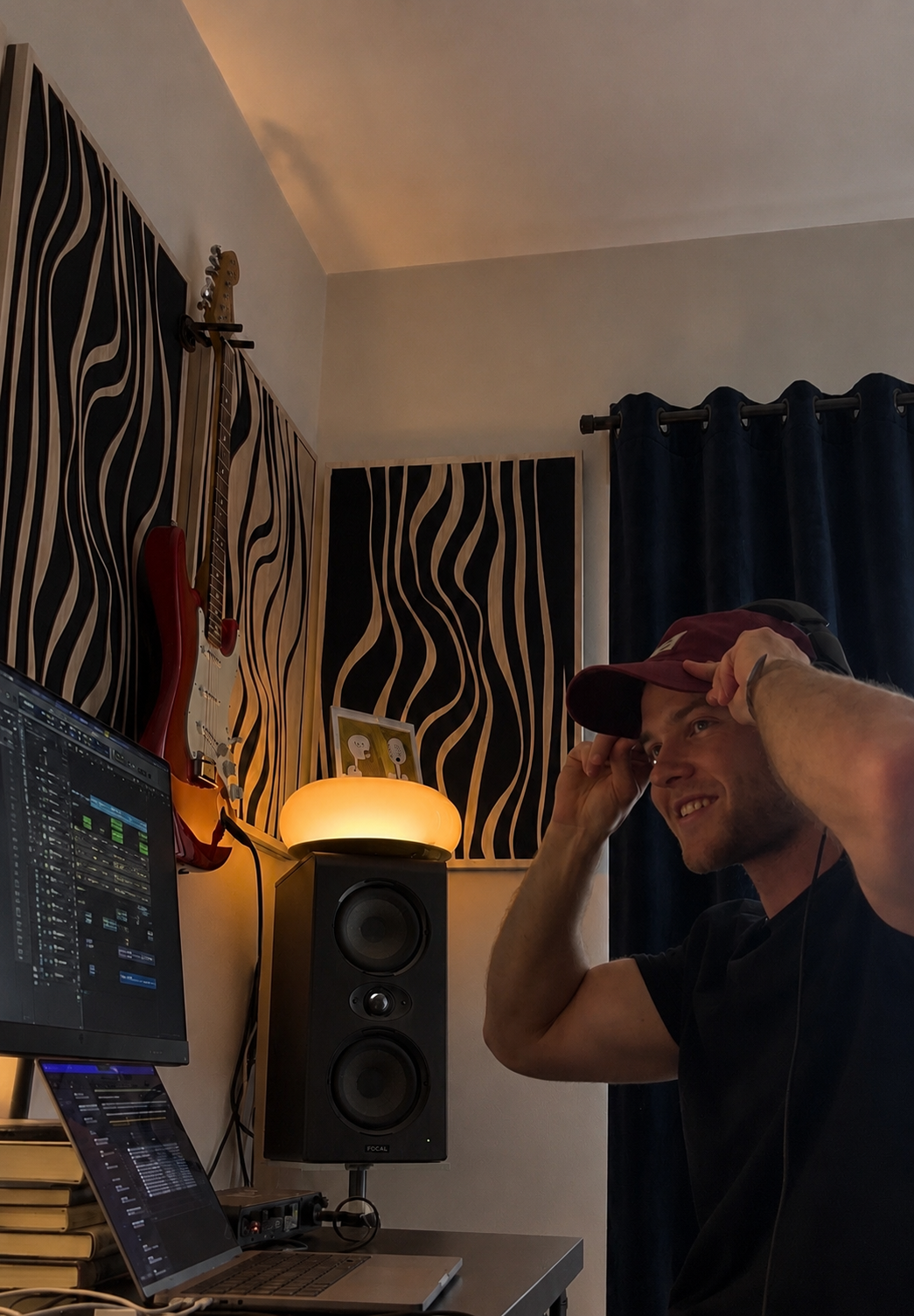
This is something that gets left out of most comparisons between AI mixing and professional mixing, but it matters just as much as the technical result. When you release a song, you're putting it out into the world under your name, and once it's out, you can't take it back. An AI vocal mixing tool can hand you a file. It can't tell you whether the song is actually ready, whether a performance choice works, or whether something still feels off in a way you can't quite pinpoint yourself.
A professional mixing engineer has heard hundreds, sometimes thousands, of vocal takes across different artists and genres. That experience is exactly what lets an engineer tell you honestly when something isn't sitting right yet, or reassure you when it is. Artists often send me a vocal they've been second-guessing for days, and half of what they need isn't another technical tweak, it's someone with real experience telling them straight that the take is strong and the song is ready. AI mixing can't offer that kind of confirmation, because it isn't listening the way a person is. It's just processing.
That's part of what you're actually paying for with professional vocal mixing. Not only the mix itself, but a second, experienced opinion you can trust before you put your work out publicly.
When to Use AI Mixing vs. When to Hire an Online Mixing Engineer
Here's a simple way to think about it:
- Use AI mixing or AI mastering when: you need a fast reference mix, you're testing an idea, budget is extremely tight, or the track isn't a final release.
- Hire a professional vocal mixing engineer when: you're releasing the song publicly, the vocal performance has emotional nuance you don't want flattened, you want a consistent sound across an EP or album, or you've already tried AI mixing and it didn't get you where you wanted to be.
If you're new to the process, it's worth reading up on how online vocal mixing actually works, what professional vocal editing involves before the mix even starts, and how tools like Melodyne and Auto-Tune fit into a modern vocal chain. Getting your recording setup right at home also does more for your final mix than any AI tool ever will.
Frequently asked questions
Can AI mix vocals as well as a human engineer?
AI vocal mixing tools can produce a technically balanced result quickly, but they apply fixed algorithms rather than responding to the emotional and creative details of a specific vocal performance. Most artists releasing a final song get a more polished, intentional result from a professional vocal mixing engineer.
Is AI mastering good enough for streaming platforms?
AI mastering can meet basic loudness and technical standards for streaming, which is part of why it's grown so popular for quick releases. Whether it's "good enough" depends on how much the final emotional impact of the song matters to you, since that's the area where a human engineer's judgment still makes the biggest difference.
What's the actual difference between AI mixing and professional mixing?
The core difference is judgment. AI mixing applies the same general patterns to every vocal it processes. Professional mixing involves a person listening closely to your specific vocal and instrumental, then making decisions about tone, dynamics, and emotion that are unique to your song.
Do professional mixing engineers use AI tools too?
Many do, often for repetitive early-stage tasks like stem separation or gain staging, so they can spend more time on the creative decisions that shape the final mix. Industry surveys show a majority of professional musicians already use AI tools in some part of their workflow, but usually to support their process rather than replace their final judgment.
Am I paying for more than just the mix itself?
Yes. Alongside the technical work, you're paying for an experienced, trusted ear to confirm that your song is genuinely ready to release, not just processed. That kind of honest, experience-based feedback is something AI mixing tools can't provide.
Continue reading
How to Mix Pop Vocals: A Complete Guide to Pop Vocal Mixing
Pop vocals live on clarity, brightness, and polish. Here's the full pop vocal chain I use, the settings I start from, and the industry-standard plugins behind a radio-ready vocal.
Best Vocal Plugins (2026): 27 Plugins Used by Professional Vocal Mix Engineers
The plugins that keep showing up on professional vocal chains in 2026, organized by category, with what each one is actually good for. Not affiliate picks, just the tools that work.
How Much Does Vocal Mixing Cost? A Real Breakdown
What I charge, why, and what you're actually paying for at each tier. Real numbers from a working engineer, no hidden 'from' pricing.